In early 2018, near the tail end of a major cryptocurrency boom, a Lithuanian start-up called Bankera announced that it had managed to raise over 100 million euros in just six months by selling its own digital coin. 

The company said the funds would be used to fashion a “bank for the blockchain era” — a fully fledged retail and investment institution, holding and exchanging most cryptocurrencies and competing with existing banks “as an equal.” 

More than 100,000 people had bought tokens in an “initial coin offering,” or ICO — a type of cryptocurrency fundraiser — and had started receiving weekly payments drawn from a share of the fees generated when others bought and sold the coin. Amid a wave of ICOs in 2017 and 2018, the Lithuanian token looked like a potentially lucrative investment.

But seven years after the ICO, the token has collapsed in value, leaving many investors disappointed, and the Bankera project still hasn't achieved one of its self-proclaimed core objectives: acquiring a European Union banking license. 

Now, an investigation by OCCRP and its partner 15min has uncovered how the once-promising cryptocurrency project has funded loans benefitting the founders of the venture, with investors left without the promised returns. 

Reporters found evidence that a portion of the funds raised in the ICO appears to have been funneled into a sprawling real estate portfolio — including a villa on the French Riviera and high-end property in Lithuania — via a bank thousands of miles away in the Pacific nation of Vanuatu.

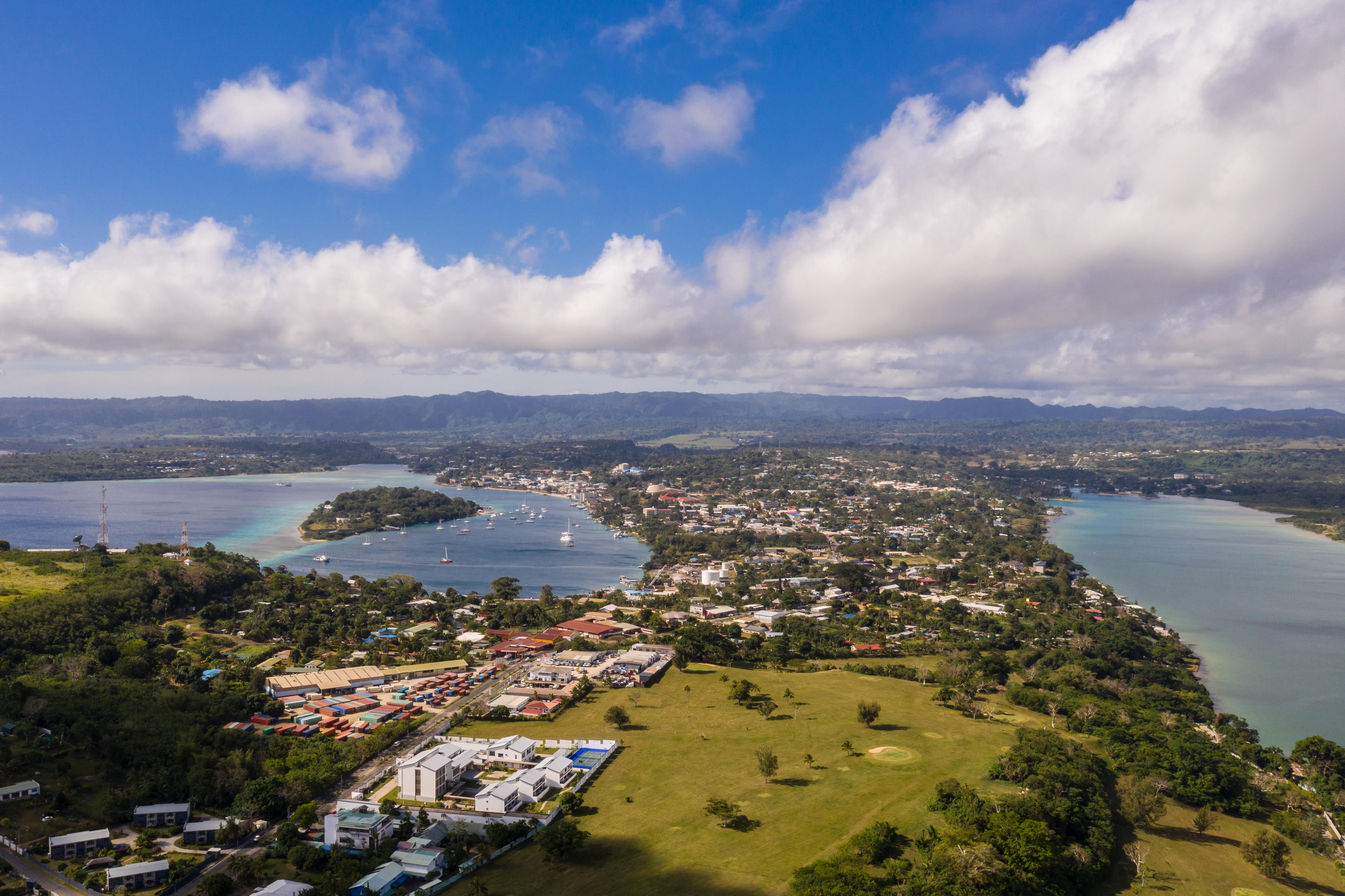
Credit: AsiaDreamPhoto/Alamy Stock Photo

The city of Port Vila, Vanuatu's capital.

In the four years following the ICO, more than 45 million euros flowed from a Lithuanian firm owned by Bankera’s three co-founders into an account at Pacific Private Bank (PPB) – a Vanuatu-based bank the three had acquired just before the coin offering ended. 

Leaked company records and bank statements show the funds were used to underwrite loans to other companies owned by the same three men, which then purchased high-end real estate. Millions more, also backed by ICO funds, were loaned directly to the three co-founders themselves, often labeled as “personal use.” 

Kathryn Westmore, who leads the Royal United Services Institute’s (RUSI’s) work on financial crime policy, said the ICO proceeds should only have been used for the Bankera project.

“To extract funds and seemingly use them to finance personal spending raises suspicions that investors have been misled and [the co-founders] have profited personally,” she said. “Fundamentally this seems to be about misrepresentation of what the [ICO] funds were going to be used for, which raises the question of whether this was a fraud.”

Reporters repeatedly tried to seek comment from Bankera’s three founders, including by traveling to a conference in Malta to attempt to speak with one of them, Vytautas Karalevičius. They sent multiple emails to him and the other founders, Justas Dobiliauskas and Mantas Mockevičius, and their companies, but only received a response from lawyers acting for the Lithuanian firm Bankera UAB, one of several companies in what the lawyers described as the “Bankera ecosystem.”

The ‘Bankera Ecosystem’

In the course of this investigation, reporters found several companies in various jurisdictions involved in the Bankera project or the ICO, as well as in receiving, holding, and moving ICO revenues. They sent requests for comments to these companies or their representatives, and directly to Karalevičius, Dobiliauskas, and Mockevičius.

The only substantive response came from lawyers representing the Lithuanian company Bankera UAB. Those lawyers declined to confirm that they were responding on behalf of the Bankera co-founders, or the other companies in what they referred to as the “Bankera ecosystem.” Bankera UAB provides IT and other services to other Bankera firms.

However, the lawyers confirmed Karalevičius, Dobiliauskas, and Mockevičius were “the founders and majority owners of the …Bankera ecosystem.” They added that none of the three co-founders “own shares in every entity within the Bankera ecosystem, nor do they own their shares equally.”

Those lawyers declined to comment on specific transactions, but cited the purchase of PPB as evidence that funds raised in the ICO “were used towards the development of an innovative neobank using blockchain technology.” The movement of funds into the Vanuatu bank’s account “had always been intended” and was carried out because “sums were given as grants to multiple Bankera ecosystem companies,” the lawyers wrote. 

While the lawyers acknowledged that the Bankera crypto token’s value had “diminished significantly over time,” they said the “Bankera brand is now well known and successful” and denied that the ICO was in any way fraudulent. They declined to comment on the specific transactions related to the loans to the co-founders and their companies, and the property purchases.

Lawyers for PPB declined to comment on the transactions revealed in the leaked banking materials, citing Vanuatu’s banking secrecy law.

PPB’s managing director, Eimantas Kazlauskas, said the bank complied with all Vanuatu banking laws and regulations. 

And PPB’s resident director, Martin St. Hilaire, said: “The goal of acquiring Pacific Private Bank by Bankera was to transform it into a modern digital bank for the blockchain era, which is being successfully done one step at a time.”

“From my standpoint, PPB has always been compliant and a good example of a small independent private bank,” he said.

The Central Bank of Lithuania told OCCRP it had contacted law enforcement regarding the Bankera ICO, but said it could not “disclose any details” due to legal restrictions.